

SEO is still the highest-leverage growth channel a SaaS company can own. Paid ads stop the moment you stop paying. Rankings, and now AI citations, compound: a page you ship this quarter can still be sending you trial signups three years from now, for free.
This guide is the complete SaaS SEO process we run at Apollo Digital, updated for how search actually works in 2026. It covers bottom-funnel keyword research, topical authority, a content engine that ships every week, technical SEO for JavaScript-heavy sites, link building that won't embarrass you, and the new layer: GEO, or being the product AI assistants recommend.
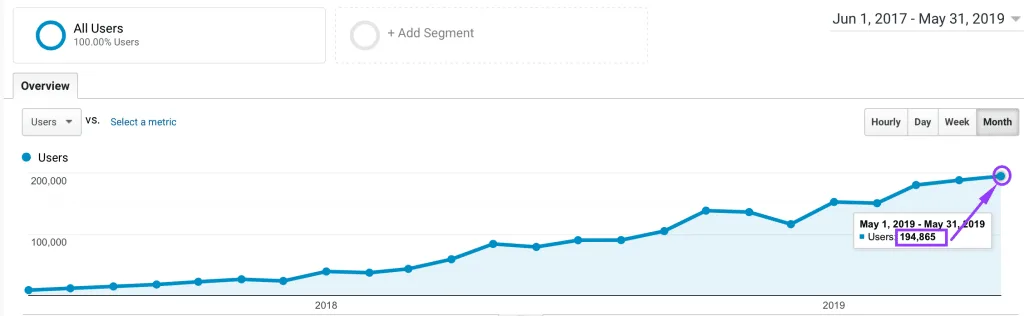
We're not writing from theory. We used this process to grow Deskera from 5K to 120K monthly organic visitors, Novorésumé from 1M to 5.2M, and a workflow SaaS from 8K to 380K. One of those builds is documented step by step, screenshots included, in our SEO case study.
It's a long read, so here's the map:
- What SaaS SEO is, and why it's a different sport from generic SEO
- The five-step process: keywords, architecture, content, technical, links
- How to measure it (signups, not sessions)
- GEO: getting recommended by ChatGPT, Perplexity, and Google's AI Mode
- Honest timelines and costs, plus a short FAQ
What Is SaaS SEO?
SaaS SEO is the process of growing a software company's signups and revenue by ranking for the searches its buyers run, on Google and, increasingly, inside AI assistants. It combines keyword strategy, content, technical SEO, link building, and conversion work, prioritized around the SaaS funnel rather than around raw traffic.
The reason it deserves its own playbook is the business model. A SaaS customer pays every month, so lifetime value is high and the math on a compounding channel is absurd in your favor. One comparison page that brings in 30 qualified trials a month is not a blog post; it's an annuity. Multiply that by fifty pages and you have a pipeline that doesn't care what your ad budget looks like.
The other reason: almost every SaaS purchase starts with a search. Someone types "best help desk software", "Zendesk alternatives", or "how do I stop answering the same support email 40 times a day". If you're not on the page (or in the AI answer) that responds, your competitor is. SaaS SEO is simply the discipline of being that answer, systematically, at every stage of the buying journey.
Why SaaS SEO Is Different From Regular SEO
SaaS SEO differs from generic SEO in three ways: the buyer journey maps to a funnel you can target page by page, the keywords that convert describe jobs and problems rather than your feature names, and the product itself can generate search demand through free tools and templates. Get these three right and you're playing a different game than the content mills in your niche.
You sell subscriptions, so the funnel is the strategy
An e-commerce store optimizes for one moment: the purchase. A SaaS buyer moves through stages, often over weeks, and each stage has its own search behavior:
- Problem-aware: "why is my team missing deadlines". They don't know software exists for this yet.
- Solution-aware: "project management software", "best tools for remote teams". They know the category, not the vendor.
- Product-aware: "Asana vs monday.com", "Trello alternatives", "monday.com pricing". They're choosing between named options.
Most SaaS teams start at the top because the volume numbers look impressive, then wonder why 60,000 monthly readers produce nine trials. The right order is the opposite: win the bottom first, where every visitor is days from a decision, then work upward. We cover the exact order in the process section below.
Jobs-to-be-done keywords beat feature keywords
Nobody searches for your feature names. Zero people type "kanban-native task orchestration layer" into Google. They type "how to manage client projects without email". Your buyers hire software to do a job, and they describe that job in their own words, not yours.
This is the single most common SaaS keyword mistake we see: building pages around the product's vocabulary instead of the buyer's. The fix is mechanical. List the jobs your product gets hired for, in the language of your sales calls and support tickets, and map each job to a query. A resume builder's biggest keyword isn't "resume builder"; it's "how to make a resume", because the product is the answer to that job. That single reframe is worth more than most technical audits.
Product-led growth gives you loops other sites don't have
A SaaS company can manufacture search demand in a way a plumber or a publisher can't: ship a free tool, template, or generator that answers a search directly. The free tool ranks, users try it, some convert, and (because genuinely useful free things attract links) the tool strengthens the whole domain, which lifts every other page. That's a loop, not a tactic.
We practice this ourselves: our AI visibility checker and content brief generator exist because free tools earn attention, links, and leads at the same time. If your engineers can build a calculator, checker, or generator adjacent to your product in a sprint, it will usually outperform ten blog posts.
The SaaS SEO Process, Step by Step
Our process has five steps, in a deliberate order: bottom-funnel keyword research, keyword-to-page architecture, a content engine, SaaS-specific technical SEO, and link building through digital PR and free tools. The order matters because the first two steps decide whether everything after them makes money or just makes traffic.
Step 1: Keyword research, bottom of the funnel first
Start with the keywords closest to money, even though their volumes look small. A query with 150 monthly searches and "vs" in it will out-earn a query with 15,000 searches and "what is" in it, every time. These are the page types that do the earning:
| Page type | Query pattern | Example | Why it converts |
|---|---|---|---|
| Comparison | [you] vs [competitor] | "monday.com vs Asana" | The shortlist is down to two; your page frames the decision |
| Alternatives | [competitor] alternatives | "HubSpot alternatives" | Searcher is actively unhappy with an incumbent |
| Category | best [category] software | "best CRM software" | Buyer knows the category and wants a shortlist |
| Use case | [category] for [audience] | "CRM for real estate agents" | Buyer self-selects; typically the highest conversion rate on the site |
| Integration | [category] for [tool in their stack] | "time tracking that syncs with QuickBooks" | Their existing stack pre-qualifies them for you |
| Pricing intent | [category] pricing / cost | "help desk software pricing" | Late-stage research; a budget already exists |
| Jobs-to-be-done | how to [outcome] | "how to make a resume" | The product is the literal answer to the query |
| Free tool / template | free [tool] / [x] template | "free invoice generator" | Product-led entry point that earns links on its own |
Here's the playbook we run for a new SaaS client:
- Pull competitors' money pages. Run your three or four closest competitors through Ahrefs or Semrush and filter their ranking pages for "vs", "alternatives", "best", "pricing", and "for". That's their revenue map, published in public.
- Mine your own conversations. Sales calls, support tickets, cancellation reasons, G2 reviews of competitors. The exact phrases buyers use become your use-case and jobs-to-be-done keywords. No tool gives you these.
- Build the comparison and alternatives list. One page per meaningful competitor, plus an alternatives page for each incumbent your buyers defect from. Be honest on these pages; a comparison that admits where the competitor wins is more persuasive and more citable.
- List every integration. Each integration your product supports is a landing page: the tool's users are searching for software that fits their stack.
- Write use-case pages per segment. One page per industry or role you genuinely serve. Thin, swapped-noun template pages get ignored; pages with segment-specific workflows and proof rank.
- Only then expand up-funnel. Once bottom-funnel coverage is complete, move to problem and solution keywords that feed topical authority (step 2) and future demand.
This step is a discipline of its own, and we've written a full walkthrough with tooling and prioritization in our SaaS SEO keyword research guide. If you sell into committees with long cycles, the funnel logic shifts a little; our B2B SEO guide covers that variant.
Step 2: Map keywords to pages and build topical authority
Every keyword group gets exactly one page, and every page belongs to a cluster. This mapping is the architecture of your entire program: it prevents two pages from competing for the same query, and it's how you build the topical authority that both Google and AI engines reward.
The practical model is pillars and clusters. Pick the three to five topics your product must own. For each, build one comprehensive pillar page targeting the head term, then 8-15 supporting pages answering the specific questions around it, all interlinked. A time-tracking tool doesn't just want to rank for "time tracking software"; it wants to be the obvious authority on time tracking, billable hours, and timesheets as topics.
Three internal linking rules that carry most of the value:
- Every new page gets 3-5 internal links from existing relevant pages on day one. Search operators make this fast: search site:yourdomain.com "your topic" and add links from what comes up.
- Descriptive anchors, always. "SaaS keyword research guide" tells Google and LLMs what the target page is. "Click here" tells them nothing.
- Blog authority flows to money pages. Your guides earn the links; your comparison and use-case pages need them. Link deliberately from the former to the latter.
Topical authority is also the quiet prerequisite for AI visibility. Language models recommend brands they've seen covered deeply and consistently. A site with 40 interlinked pages on one topic reads as an authority; 40 scattered posts on 40 topics reads as noise.
Step 3: Run a content engine, not a content lottery
Consistent output beats sporadic brilliance. One or two genuinely strong pieces a week, shipped every week for a year, will beat a burst of ten posts followed by silence, both in rankings and in AI citations. The engine looks like this:
- Brief before draft. Every piece starts with a brief: target keyword, searcher intent, outline, internal links, and the unique angle (data, experience, or opinion) that justifies the page existing. Our free content brief generator builds the skeleton in minutes.
- Write from the product and the customer, not from the SERP. Rewriting the current top three results is how you produce the eleventh version of the same article. Real screenshots, real workflows, real customer language, and a stated opinion are what Google's people-first content guidance keeps asking for, and what its ranking systems have been getting steadily better at detecting.
- Expert review before publish. Someone who actually knows the domain reads every draft. This is the step that separates content from AI-flavored filler, and in 2026 the gap between the two is the whole game.
- Answer first under every heading. Open each H2 with a direct one-or-two-sentence answer, then elaborate. Humans skim it, Google features it, and AI engines quote it.
- Refresh on a schedule. Every quarter, find pages ranking 5-15 or decaying, and update them: newer data, tighter intro, more internal links. A refresh is routinely the cheapest traffic you'll buy all year.
How this engine plugs into distribution, conversion paths, and team structure is its own topic; we've written it up in the SaaS content marketing guide.
Step 4: Technical SEO for SaaS sites
Technical SEO won't rank you by itself, but it can silently cap everything else, and SaaS sites have failure modes most sites don't: JavaScript frameworks, app subdomains, docs, and programmatically generated pages. Run this checklist:
- Render your marketing site without JavaScript. Google can render JS, but rendering is queued separately from crawling, and most AI crawlers don't execute JavaScript at all. Server-side render or pre-render every page you want ranked and cited.
- Separate the app from the site. Keep the product on app.yourdomain.com and keep it out of the index. Marketing, blog, and docs live on the root domain, where their authority compounds together.
- Make docs and changelog indexable. Documentation answers long-tail, high-intent queries and is disproportionately quoted by AI engines. Locking it behind a login throws that away.
- Canonicals on programmatic pages. If you generate integration or template pages at scale, every URL needs a self-referencing canonical, unique copy worth indexing, and a place in the sitemap. Thin variants should be consolidated, not published.
- Keep the basics boring. One clean sitemap, a robots.txt that doesn't block what should rank, sane Core Web Vitals, compressed images, one H1 per page, titles and metas written for clicks.
- Don't block AI crawlers. GPTBot, ClaudeBot, and PerplexityBot can't recommend what they can't read. Check your robots.txt before assuming you have a GEO content problem.
- Add schema where it's honest. Article, FAQPage, Product, and Organization markup help machines parse who you are and what you claim. Don't mark up content that isn't on the page.
Step 5: Link building through digital PR and free tools
Links still decide competitive SaaS keywords, and the honest ways to earn them now outperform the spammy ones on both cost and risk. Guest-post farms and PBNs are a liability you pay for twice: once in cash, once in the cleanup. What actually works for SaaS:
- Original data studies. You're sitting on product data nobody else has. Anonymize it, find the surprising number, publish the study, and pitch the journalists and newsletters covering your space. One good study can earn more referring domains than a year of outreach.
- Free tools. The same tools from your PLG loop are link magnets: "free [x] generator" pages get cited by every listicle and resource roundup in the niche, indefinitely.
- Get into the roundups that already rank. Search "best [your category] software", list everyone ranking, and pitch the authors on why you belong. These pages are also exactly what AI engines read when they build software shortlists, which makes this the rare tactic that pays twice.
- Founder commentary. Journalists need quotable experts. Answer source requests, publish takes with a spine, and your founder's name becomes a link source.
- Partner and integration swaps, in moderation. Your integration partners have directories and blogs; a real partnership justifies a real link in both directions.
Budget expectation: in a competitive category, plan for link acquisition as a permanent line item, not a launch task. Your money pages, comparisons and use cases especially, need deliberate links because nobody links to commercial pages out of kindness.
Measure Signups, Not Sessions
The only SaaS SEO metrics that ultimately matter end in revenue: trial signups, activations, and pipeline sourced from organic. Traffic is a leading indicator worth watching, but the moment it becomes the goal, your program drifts toward high-volume keywords that convert nobody.
The measurement stack we set up for every client:
- Signups by landing page. In GA4 or your product analytics, attribute every trial and demo request to the organic landing page that started the session. This one report tells you which pages are assets and which are decoration.
- Assisted journeys. SaaS buyers touch five pages before converting. A guide that never converts directly but appears in half your converting paths is doing its job; judge top-funnel content on assists, not last clicks.
- Self-reported attribution. Add "how did you hear about us?" to signup. It's crude, but it's the only channel that catches dark funnel journeys, including "ChatGPT recommended you", which we now see weekly in client forms.
- Branded search volume. Growth in searches for your name is the cleanest proxy for content and PR actually building awareness.
- Cohort the content. Review every page quarterly: pages that earn signups get expanded, pages that rank without converting get better CTAs and internal links, pages that do neither get refreshed, merged, or cut.
One number for perspective: a use-case page pulling 400 visits a month at a 5% trial rate produces 20 trials. A listicle pulling 40,000 visits at 0.05% produces the same 20, costs more to rank, and decays faster. Volume flatters; conversion pays.
GEO: The AI Search Layer for SaaS in 2026
GEO (generative engine optimization) means making your product the one AI assistants name when someone asks for the best software in your category. For SaaS in 2026 this is not optional: the shortlist conversation that used to happen across ten blue links now happens inside a single generated answer, and you're either in it or invisible.
The scale is no longer debatable. ChatGPT passed 900 million weekly active users in early 2026, and on Google itself, Ahrefs measured a 34.5% lower clickthrough rate for the top organic result when an AI Overview sits above it, with more recent measurements suggesting the gap keeps widening. Fewer clicks reach every site; the brands named inside the answers keep winning anyway.
The good news: if you've done the previous five steps, most of the GEO work is already done. AI engines recommend products that dominate the sources they read and publish content they can parse. The SaaS-specific layer:
- Establish your baseline. Ask ChatGPT, Claude, Perplexity, and Google's AI Mode the questions your buyers ask: "best [category] software", "[competitor] alternatives", "[category] for [segment]". Record who gets named. Our free AI visibility checker automates the first pass.
- Win the pages the engines read. AI shortlists lean on roundups, review platforms like G2 and Capterra, Reddit threads, and comparison content. Your presence there matters as much as your own site now.
- Publish machine-quotable pages. Direct answers under clear headings, comparison tables, honest pros and cons, and consistent facts (pricing, features, positioning) everywhere your product is described. Inconsistency reads as unreliability to a model deciding whether to cite you.
- Keep the crawlers in. Verify robots.txt, render your content without JavaScript, and keep your docs public. Then track mentions over time, not just rankings.
We've published deeper tactical guides on both halves of this: what GEO actually is (and isn't) and how to get your brand cited by ChatGPT. Read those next if AI visibility is your current gap.
How Long Does SaaS SEO Take, and What Does It Cost?
Expect the first meaningful signups in 3 to 6 months and genuinely compounding results from month 12 onward; even Google's own guidance says most sites need four months to a year to see benefits. Anyone promising page one in 30 days is describing either a keyword nobody wants or a tactic you'll regret.
A realistic timeline for a SaaS starting seriously:
| Phase | Months | What actually happens |
|---|---|---|
| Foundation | 0–1 | Keyword research, page mapping, technical fixes, measurement setup |
| Bottom-funnel build | 2–4 | Comparison, alternatives, use-case, and integration pages ship; first long-tail rankings and first organic trials |
| Authority build | 5–8 | Clusters fill out, links accumulate, money pages climb from page 3 to page 1 on mid-competition terms |
| Compounding | 9–12 | Head terms become winnable, refreshes stack on top of new content, organic becomes a predictable pipeline source |
| Moat | 12+ | Topical authority plus link profile plus AI citations get harder for competitors to displace every quarter |
On cost: in Ahrefs' survey of 439 SEO providers, most businesses spent between $500 and $5,000 a month, and agency retainers averaged around $3,200. For SaaS specifically, our honest take is that a real program (content production, technical work, and links, run by people who know the space) rarely makes sense below roughly $3,000 a month, and competitive categories often justify $10,000 or more. That money buys roughly the same output whether you spend it on an agency or on in-house hires; the difference is speed to competence and who carries the hiring risk.
If you're evaluating outside help, we wrote an opinionated comparison of the best SaaS SEO agencies (we're on it, and we say so). And if you're already past six figures of monthly traffic and wondering what changes at scale, read our enterprise SaaS SEO breakdown.
SaaS SEO FAQ
Short answers to the questions we get on nearly every intro call.
What is SaaS SEO?
SaaS SEO is the process of growing a software company's signups and revenue by ranking for the searches its buyers run, on Google and inside AI assistants like ChatGPT. It combines keyword strategy, content, technical SEO, link building, and conversion, prioritized around the SaaS funnel rather than around raw traffic.
How is SaaS SEO different from regular SEO?
Three ways. The buyer journey maps to a funnel you target page by page, starting with comparison, alternatives, and use-case pages. The keywords that convert describe jobs and problems in the buyer's words, not your feature names. And the product itself can create search demand through free tools and templates, a loop most industries don't have.
How long does SaaS SEO take to work?
Plan on 3 to 6 months for the first meaningful signups and 12 months for compounding results. Google's own guidance says most sites need four months to a year to see benefits. Bottom-funnel pages in a soft niche can convert sooner; head terms in competitive categories take longer.
How much does SaaS SEO cost?
Across industries, most businesses spend between $500 and $5,000 a month, and agency retainers average around $3,200 a month per Ahrefs' provider survey. For a serious SaaS program covering content, technical, and links, budget $3,000 to $10,000+ a month, whether that buys an agency or in-house heads. You can see exactly how we price on our pricing page.
Does AI search matter for SaaS?
Yes, and more every quarter. Buyers ask ChatGPT, Perplexity, and Google's AI Mode for software shortlists, and the products named in those answers win the trial. The work that earns AI recommendations overlaps heavily with strong SEO: clear structure, topical authority, and presence on the review sites and roundups the engines read. Start by checking whether AI can see you at all with our free AI visibility checker.
The Short Version
SaaS SEO in 2026 comes down to a sequence, run in order and never really finished: bottom-funnel pages first, topical authority second, a weekly content engine third, clean technical foundations underneath, and links earned with data and free tools. Measure it in signups, extend it into AI answers, and give it the 6 to 12 months it genuinely needs.
It's not fast, and it's not free. It's just the only acquisition channel that gets cheaper every month you run it. If you'd rather see the receipts before the theory, our step-by-step SEO case study shows the whole process applied to one company, number by number.