

Most B2B marketing guides are a list of twelve channels with a paragraph of cheerleading under each one. This is not that. We first published this guide in 2020, back when it lived as three separate posts. This is the full 2026 rewrite, merged into one page: what actually makes B2B different from every other kind of marketing, a channel-by-channel playbook with steps you can run this quarter, and the honest math on which channels deserve your budget first.
Everything here comes from work we can show. We took one B2B SaaS from 0 to 197,514 monthly organic visitors in two years, grew Deskera from 5K to 120K monthly organic visitors, and drove over $50,000 in revenue from a single blog post. Where we cite numbers we did not produce ourselves, they link to the source that did.
One warning before we start. A fair amount of the 2020 advice did not survive contact with 2026. LinkedIn engagement pods, mass connection automation, spray-and-pray cold email: we used to cover all of it, and we have cut what we no longer recommend. Where the old advice died, we will tell you what replaced it.
What is B2B marketing?
B2B marketing is how companies that sell to other businesses create demand and pipeline. The customer is an organization, the money is company budget, and the person your ad reaches is almost never the only person who decides. A marketing agency selling to SaaS companies, a payroll platform selling to CFOs, an accounting firm selling to founders: all of them do B2B marketing, whether they call it that or not.
That definition sounds close enough to consumer marketing that most teams assume the same playbook applies. It does not, and the gap is not a matter of tone or channel choice. It is structural. The buyer is a committee, the sale takes months, the audience is tiny, and most of the buying journey happens where you cannot see it. Each of those four facts reshapes the work, so let us take them one at a time.
B2B vs B2C: the four differences that change everything
The short version: in B2C one person notices, wants, and buys, often in the same week. In B2B a group of people research for months, argue internally, and then one of them contacts you after the decision is mostly made. Every strategy choice in this guide flows from that difference.
1. A committee buys, not a person
6sense's Buyer Experience Report, covered by Demand Gen Report, puts the average B2B buying group at 11 people. Eleven. The person who finds you is usually a champion, not a signer, and after they get excited they still have to sell you internally to a manager, a finance lead, maybe a security team. So your marketing has to arm the champion with material they can forward: honest comparisons, ROI framing, proof you will not embarrass them. Marketing that only ever speaks to the end user produces demos that stall in week three, when the rest of the committee shows up.
2. The cycle runs months, not minutes
The same 6sense research pegs the average B2B buying cycle at 11.3 months. Nobody reads one post and signs a $50,000 contract that afternoon. The practical consequence: campaigns built for an immediate response, the bread and butter of consumer marketing, systematically underperform in B2B, while assets that keep working across a year, a ranked article, a comparison page, a newsletter someone actually reads, quietly compound. B2B marketing rewards patience structurally, not as a virtue but as arithmetic.
3. Small audiences, huge deal values
"Best running shoes" gets hundreds of thousands of searches a month. Your category might get a few hundred, from a total addressable market of a few thousand companies. That inversion breaks consumer instincts: reach is nearly worthless, relevance is everything, and a single closed deal can pay for a quarter of marketing. When one keyword with 90 searches a month sits in front of six-figure contracts, you build the best page on the internet for it and ignore the volume column. Price your marketing by the pipeline behind an audience, never by the size of it.
4. Most of the journey is invisible: the dark funnel
Here is the number that should reorganize your whole strategy. 6sense's research found B2B buyers are nearly 70% through their purchasing process before they engage a seller, buyers initiate that first contact 80% of the time, and 81% already have a preferred vendor when they do. In other words, the deal is mostly decided during a research phase you cannot see: private Slack channels, peer recommendations, review sites, AI assistants, forwarded links. Marketers call it the dark funnel, and it is where B2B deals are actually won.
Layer on the finding from LinkedIn's B2B Institute and the Ehrenberg-Bass Institute, the 95-5 rule: about 95% of your potential buyers are not in the market today. Combine the two and the job description of B2B marketing gets precise. Be known and trusted by the 95% before they ever start buying, so that when a buying trigger fires and the invisible research begins, you are the day-one favorite. Chasing only the in-market 5% with ads and outreach is competing for the leftovers.
| B2B | B2C | |
|---|---|---|
| Who decides | A buying group, 11 people on average | One person, sometimes a household |
| Cycle length | Months, 11.3 on average | Minutes to weeks |
| Audience and deal size | Small audience, five to seven figure deals | Mass audience, small transactions |
| Where buying happens | Mostly invisible research before first contact | Mostly trackable clicks and visits |
| What marketing must do | Build memory and trust with the out-of-market 95% | Trigger a purchase from the in-market shopper |
How to build a B2B marketing strategy in 5 steps
A B2B marketing strategy is four decisions written down: who you sell to, why you win, which number proves it is working, and which two channels you will run properly. Here is the sequence we use with clients before a single campaign launches.
- Nail the positioning first. One sentence: who it is for, and why you over the obvious alternative. If your team cannot repeat it, buyers certainly will not repeat it for you inside the committee conversations you will never see. Every channel downstream is this sentence wearing different clothes.
- Define the committee, not just the persona. Map the champion who finds you, the decision-maker who approves, and the blockers who can kill it, usually finance, IT, or security. Write down what each of them needs to hear, in their own words, taken from real sales calls. This document quietly writes your content plan, your ads, and your sales enablement pages.
- Pick one number that means it is working. Qualified pipeline is the usual right answer. Not traffic, not followers, not MQLs nobody downstream respects. Every channel gets judged against this number, which keeps vanity metrics from steering the budget.
- Choose two channels and go deep. Not six. Two channels executed fully beat six executed at 20%, because every channel has a competence threshold below which it produces nothing at all. The prioritization framework later in this guide tells you which two fit your stage.
- Execute, measure honestly, then scale. Run each channel long enough for a fair test: a quarter for paid, a year for SEO or community. Track what you can, and accept that dark-funnel influence will show up as "direct traffic" and "how did you hear about us" answers rather than clean attribution. When a channel works, feed it. When it does not, kill it without sentiment.
The B2B marketing channel playbook for 2026
Seven channels reliably produce B2B pipeline in 2026: SEO with content as the compounding core, LinkedIn organic built on real people, paid search and paid social, email, community, events and partnerships, and the new one, AI search visibility. Below is each channel with a direct verdict, a numbered playbook, and the examples we can actually verify.
1. SEO and content marketing: the compounding core
If your buyers search for anything related to their problem, SEO plus content is the highest-return B2B channel over any multi-year window, because pages keep selling for years after you pay for them once. It is the channel behind every result we cited in the intro, and it is slow, which is exactly why the competitors who quit early leave the field to you.
The B2B version has one rule that changes everything: start at the bottom of the funnel and work upward. Most teams do the reverse, spend a year building traffic that never converts, and conclude SEO does not work for B2B. The sequence we run:
- Bottom-funnel keyword research first. Your category plus software, tool, agency, or service. Competitor alternatives and versus queries. Pricing and integration queries. These look pitiful in a volume report and they are worth more than everything else on the list combined.
- Pain-point content second. Articles built around the problems your product solves, phrased the way a practitioner phrases them, not "what is X" glossary posts that attract students and competitors.
- Comparison and alternatives pages third. The highest-intent pages you will ever publish. Be honest about where competitors win; buyers discount rigged comparison tables on sight, and honesty on one row buys trust on every other.
- Sales-enablement content fourth. Security pages, ROI breakdowns, implementation guides. These rarely rank and they close deals anyway, because they are what the champion forwards to the committee.
- Then production rhythm. Brief before draft, always. Our free content brief generator builds an SEO outline in about a minute. One genuinely strong page a week compounds; ten thin ones compound in the wrong direction.
Intent beats volume at every step, and it is measurable: when Backlinko rebuilt one page around what searchers actually wanted, organic traffic to it rose 652.1% in 7 days. Our own version of the same discipline, cutting every irrelevant topic and rebuilding the plan around buyer intent, is what produced the growth below for a workflow software client, documented in full in the SEO case study.
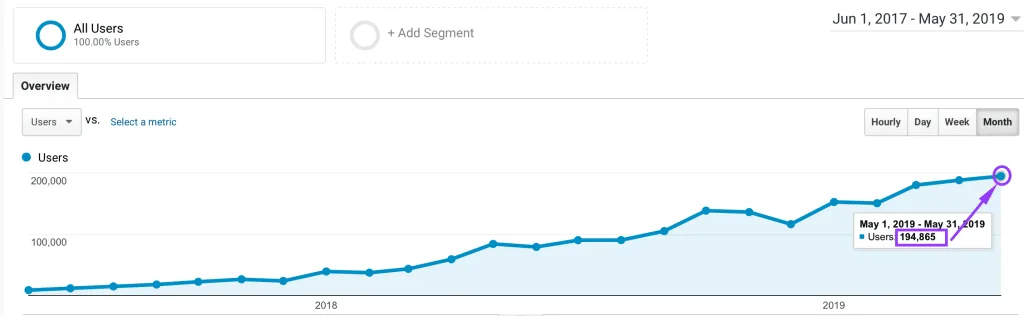
This guide can only fly over the channel; the full ground-level playbook, from keyword research to honest pipeline attribution, is in our complete B2B SEO guide, which is the hub for everything search-related we publish. The craft of the content itself lives in the B2B content marketing guide, and if you sell software specifically, the SaaS SEO mega-guide goes deeper still.
2. LinkedIn organic and the founder brand
LinkedIn organic works in 2026 for one reason: it is the only place your buying committee scrolls voluntarily, daily, while thinking about work. But the reach belongs to people, not logos. A company page is a legitimacy checkpoint buyers glance at once; a founder or expert posting real lessons is a channel.
The research backs the effort. LinkedIn and Edelman's thought leadership research found 75% of decision-makers say a piece of thought leadership led them to research a product or service they were not previously considering, and about 9 in 10 say they are more receptive to outreach from companies that consistently produce good thought leadership. That is the dark funnel again: posts working on the out-of-market 95% months before a deal exists.
The playbook:
- Pick the person, not the brand. Founder, or your most credible practitioner. Their name, their face, their voice.
- Post 2 to 3 times a week from real work. A client situation, a mistake, a number, a teardown, a strong opinion you can defend. The bar is "would a peer forward this", not "does this mention our product".
- Open with the point. The first two lines decide whether anyone expands the post. Direct answer up top, story after.
- Spend 15 minutes a day in other people's comments. Thoughtful comments on posts your buyers read build reach faster than your own posting schedule early on.
- Let sales follow, not lead. The DMs that convert reference something the buyer already read. Pitch-first DMs burn the trust the content built.
And the honest correction to our own 2020 advice: we used to recommend engagement pods and connection automation here. We no longer do. Pods manufacture engagement the algorithm now discounts, automation violates LinkedIn's terms and gets accounts restricted, and both attract the audience least likely to ever buy. Slower and real outperforms fast and fake on a channel built on reputation.
3. Paid: search ads vs social ads, and the honest CAC math
Paid works in B2B when one condition holds: the lifetime value of a customer comfortably covers what it costs to buy one, with room to spare. It is a faucet, not an asset. Traffic starts when spend starts and stops the day it stops, which makes paid the right accelerant for a working engine and the wrong foundation for a company with nothing else running.
The two families do different jobs. Search ads capture demand that already exists: someone types "payroll software for startups", you bid, they see you at the moment of intent. Social ads interrupt people who were not looking, which in B2B means LinkedIn's targeting by job title, seniority, company size, and industry, aimed at the exact committee you mapped in your strategy. LinkedIn clicks cost multiples of what Facebook charges, so the math only clears when deal values are high, and its cheapest use is not cold reach at all: retargeting the people who already visited your pricing page is the closest thing paid B2B has to easy money.
How we would start:
- Bid on your own brand and bottom-funnel category terms first. Highest intent, smallest budget, fastest signal.
- Send every ad to a matching page. An ad for "payroll for startups" pointing at a generic homepage is a paid bounce.
- Install retargeting before scaling cold traffic. Warm audiences convert at a fraction of the cost, and they compound with every other channel in this guide.
- Judge on pipeline per dollar after 90 days, not clicks. Cost per click and cost per lead are noise; cost per qualified opportunity is the number.
- Expect 2 to 3 months of optimization before the account is honest. The first month of any paid account is tuition.
What we will not do is quote you an average B2B CAC benchmark, because the spread across industries and deal sizes makes every such number a fiction. Run your own payback math: months to recover acquisition cost from gross margin. If the answer clears within a year and shortens as you optimize, scale. If it does not, no amount of ad-copy testing rescues the channel.
4. Email and the newsletter: the channel you own
Email is the only channel on this list where no algorithm sits between you and your audience, and the economics reflect it: in Litmus's State of Email research, software and technology companies report returns around $36 for every dollar spent on email. Every other channel in this guide should be quietly feeding this one.
For most B2B companies the right form is a newsletter someone would miss if it stopped. Given 11-month cycles, a monthly or biweekly send is how you stay in the room for the ten months when the buyer is researching and not talking to you.
- Capture from day one. Every article, tool, and talk should offer one obvious reason to subscribe. The list is the asset; the sending tool is swappable.
- Send on a rhythm you can hold for years. Monthly and reliable beats weekly and abandoned by March.
- Lead with one genuinely useful thing. A lesson, a teardown, a number from your own work. Product news goes at the bottom, briefly.
- Segment by intent when it matters. The person who read your pricing page three times should not get the same email as someone who downloaded a top-of-funnel guide.
- Measure replies and pipeline, not opens. Open rates have been unreliable for years. A reply from a director at a target account is worth a thousand opens.
A boundary worth stating: cold email to bought lists is a sales motion, not marketing, and in 2026 it is a knife-edge of deliverability and sender reputation. If you run it, run it as sales, from separate domains, personalized and small-batch. Blasting 1,000 identical emails from your main domain risks the channel above, which is worth far more.
5. Community and build-in-public: trust at scale
Community is the slowest channel in this guide and the hardest to fake, which is precisely why it works: a recommendation inside a community is the single most trusted touch a B2B buyer receives, and it lands squarely in the dark funnel where 6sense says the decision actually happens. We run our own, r/SEOCapitalist, where we break down real campaigns in the open, and it produces conversations no ad budget could buy.
- Join before you build. Your buyers already gather somewhere: subreddits, Slack groups, niche forums. Six months of being genuinely useful there beats launching an empty Discord.
- Answer questions with zero pitch. The community remembers who helped. Bios and profiles do the selling; posts should not.
- Build in public if you can stomach it. Sharing real numbers, decisions, and failures on LinkedIn or in a community turns your company's progress into a story people follow, and followers into a launch audience.
- Only start your own community once you have an audience that keeps asking for it. Most company communities die within a year because they are marketing channels wearing a community costume. Yours needs a reason to exist that is not you.
6. Events and partnerships: borrowed trust
Events concentrate your buying committee in one room, and partnerships borrow someone else's earned trust; both work, and both are expensive in either cash or time, which is why they belong after your compounding core is running, not before. A trade show booth runs four figures to six, so the preparation, not the booth, is where the return is decided.
- Pick events by attendee list, not prestige. Twenty conversations with actual buyers at a niche industry event beat a badge scan pile from a mega-conference.
- Book meetings before you fly. The event is the excuse; the calendar you fill in the three weeks prior is the channel.
- Speak if at all possible. A 25-minute talk does more than two days of booth duty, and the recording keeps working afterward.
- For partnerships, start where your customers already overlap. Integration partners, agencies serving your niche, adjacent tools. Co-marketing, shared webinars, mutual integration pages: each one puts you in front of a list someone else spent years earning.
- Follow up within 48 hours. Every event contact decays by the day. The follow-up email drafted on the flight home is worth more than the booth.
7. The 2026 layer: AI search and GEO
Here is what changed since this guide was first written: your buyers now ask ChatGPT, Perplexity, and Google's AI results for vendor shortlists before they ever visit your site. A founder types "best CRM for a 10-person sales team", five names come back in a paragraph, and every vendor not in that paragraph was eliminated without knowing a search happened. Generative engine optimization, GEO, is the work of being in the paragraph.
The scale argument is settled. Semrush's AI search study found ChatGPT's weekly active users grew 8x from October 2023 to April 2025, projected that AI search visitors could overtake traditional search visitors for their topic set by early 2028, and, most importantly for B2B, found the average AI search visitor is worth 4.4x the average traditional organic visitor, because people arrive pre-researched and close to a decision. One more finding worth internalizing: about 90% of the pages ChatGPT cites rank in position 21 or lower in traditional search, meaning AI engines are not simply reading Google's top ten back to you. Being citable matters on its own.
The playbook overlaps heavily with good SEO, which is the reassuring part:
- Run your ten most important buying questions through the major engines monthly. Log who gets named and cited. That gap is your roadmap. Our free AI visibility checker shows where you stand in about a minute.
- Make sure AI crawlers can read your site. GPTBot, PerplexityBot, and ClaudeBot cannot cite what robots.txt blocks.
- Structure pages so the answer is extractable. Question-shaped headings with a direct answer in the first lines, clean structure, schema. Engines cite what they can parse.
- Earn third-party corroboration. Engines recommend vendors that reviews, communities, and industry press independently confirm. Your community and PR work now has a second payoff.
- Keep your facts consistent everywhere. Same positioning, pricing model, and category language across your site, directories, and profiles, so the machines assembling an answer about you agree with each other.
The full playbook, including which parts of the GEO industry are snake oil, is in our generative engine optimization guide.
Which channels first: prioritization by stage
The direct answer: two channels done properly beat six done at 20%, and which two depends on stage. Here is the sequence we would run, and do run, with clients.
Stage 1, pre-revenue to first customers. Founder-led everything. Sell the first deals by hand through your network, LinkedIn, and the communities where your buyers already gather; start the founder-brand posting rhythm now, because trust has the longest lead time of any asset you will build. Plant the SEO seed at the same time: a blog on your own domain and your first bottom-funnel pages, because the channel needs months of runway and the best day to start was last quarter. Skip paid entirely; you do not yet know what converts.
Stage 2, early traction, roughly to your first $1M in annual revenue. Commit to the compounding core: SEO plus content, executed on the bottom-funnel-first sequence above, with email capture on everything and retargeting installed. Add intent-based search ads only if a deal's economics obviously cover the spend. Your job at this stage is to get one channel to undeniable, before spreading to a second.
Stage 3, scaling. Now layering pays. LinkedIn ads aimed at your mapped committee, events chosen by attendee list, partnerships with the tools and agencies your customers already use, and the GEO layer run monthly as a standing check. If you sell software, our B2B SaaS marketing guide covers the SaaS-specific version of this whole ladder.
On budget: our rule of thumb is roughly 60% of effort into the compounding core, 25% into capture and conversion, meaning email, retargeting, and search ads, and 15% into experiments that might become next year's core. And if you would rather buy the execution than build it, vet vendors the way we describe in our guides to B2B marketing agencies and B2B SEO agencies, or look at how we price it ourselves. The vetting rule is the same everywhere: documented results on businesses like yours, not traffic screenshots.
B2B marketing examples you can actually verify
Most "B2B marketing examples" articles recycle decade-old case studies whose sources have quietly vanished; the 2020 version of this very guide cited several that no longer exist, and we cut them rather than repeat numbers nobody can check. What survives is what we can show or link.
From our own work: the workflow software SEO case study, 0 to 197,514 monthly organic visitors in two years off bottom-funnel keyword strategy and relentless content outlines. The Deskera case study, 5K to 120K monthly organic visitors for a B2B accounting platform. And the content marketing case study, over $50,000 in revenue from one deeply researched, heavily promoted article, which remains the cleanest proof we have that a single great asset can outperform a quarter of average ones.
From the wider web, the examples we cited throughout this guide are the ones whose sources still stand: Backlinko's intent-rebuild producing a 652.1% traffic lift in a week, and the research from 6sense, LinkedIn, Semrush, and Litmus that anchors the numbers above. For a longer tour, our roundup of digital marketing case studies collects the ones still worth stealing from, with notes on what each actually proves.
B2B marketing FAQ
What is B2B marketing?
B2B marketing is how companies that sell to other businesses create demand and pipeline. The buyer is a committee spending company budget rather than an individual spending their own, so the work centers on being findable during long research cycles, convincing several stakeholders at once, and building enough trust that you are already on the shortlist before sales gets involved.
How is B2B marketing different from B2C marketing?
Four structural differences: a committee decides instead of one person, cycles run months instead of minutes, audiences are tiny while deals are huge, and most of the journey happens before you ever see the buyer. 6sense's research found buyers are roughly 70% through their process before contacting a vendor, and 81% already have a favorite when they do. B2B marketing is largely the work of becoming that favorite invisibly.
What are the best B2B marketing channels in 2026?
SEO plus content is the most reliable compounding core for most B2B companies, followed by LinkedIn organic built on real people, email to an owned list, and paid search to capture existing demand. Community, events, and partnerships layer on later, and AI search visibility is the 2026 addition, since buyers now shortlist vendors inside ChatGPT. Two channels executed fully beat six executed at 20%.
How should we allocate a B2B marketing budget?
Our rule of thumb: about 60% into one compounding channel you commit to for at least a year, usually SEO plus content. Around 25% into capture and conversion, meaning email, retargeting, and intent-based search ads. Keep 15% for experiments. The most common budget mistake in B2B is spreading spend so thin across channels that none ever gets a fair test.
Does AI search actually matter for B2B marketing yet?
Yes. Buyers ask ChatGPT and similar engines for vendor shortlists before visiting any website, and vendors missing from those answers are eliminated without a trace in your analytics. Semrush's research found the average AI search visitor is worth 4.4x a traditional organic visitor because they arrive pre-researched. The work overlaps heavily with good SEO, so treat it as a layer on your content engine, not a separate program.