

Most digital marketing case study roundups are graveyards. Thirty links, half of them dead, numbers nobody ever checked, and not a single play you could actually run on Monday.
So we rebuilt this one from scratch.
Every case study below passes three tests: the source is live and linked, every number comes from that source (we re-verified all of them in August 2026), and there's a concrete play you can copy. We cut more than a dozen "classics" whose pages no longer exist. If we couldn't verify it, it didn't make the list.
Each entry follows the same structure: what happened, why it worked, and a numbered "steal this" playbook. We lead with our own client work (numbers we can stand behind because we produced them), then the best public case studies across SEO, content, paid, email, and product-led growth.
The 16 Case Studies, by Channel
Jump to the channel you're working on:
- Our own case studies: first-party numbers, full process documented
- SEO case studies: intent-matching, keyword prioritization, link building
- Content marketing case studies: distribution and data-driven content
- Paid ads case studies: Facebook, Google, and crowdfunding campaigns
- Email, referral & launch case studies: lists, loops, and webinars
- Product-led & retention case studies: freemium, streaks, and stickiness
- How to actually use a case study
- Frequently asked questions
Our Own Case Studies (First-Party Numbers)
We'll start with the three we can vouch for personally: we did the work, and the full process for each is documented on this site. You can see every project on our case study board.
1. Apollo Digital: 0 to ~200K Monthly Organic Visits in Under 2 Years
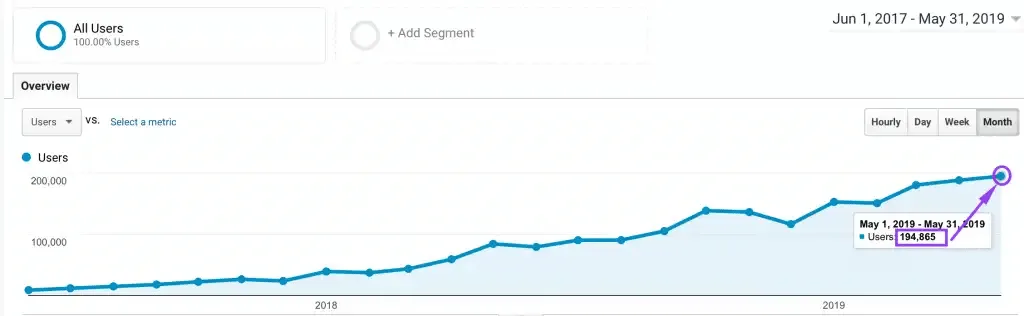
What happened: We took a SaaS client in the business process management niche from zero to 197,514 monthly organic visits in under two years, with zero link building. The traffic we ranked for would cost over $369,000 per month to buy as ads, including top-3 spots for $20–25 CPC keywords. The full process is in our SEO case study.
Why it worked: Nothing exotic. We fixed the foundations most blogs skip: killed keyword cannibalization, rebuilt the keyword list around business value, gave writers real outlines instead of vague briefs, and interlinked everything. Content quality did the job backlinks usually do.
Steal this:
- Audit before you write: list every published post and its target keyword, and merge or kill any two posts chasing the same term.
- Give writers an outline per article: target keyword, subheadings, and the questions the post must answer.
- Interlink every new post into its topic cluster the day it goes live, not "eventually."
- Review Search Console monthly and rewrite titles on pages whose CTR underperforms their position.
2. Apollo Digital: $50,000+ in Revenue From a Single Blog Post
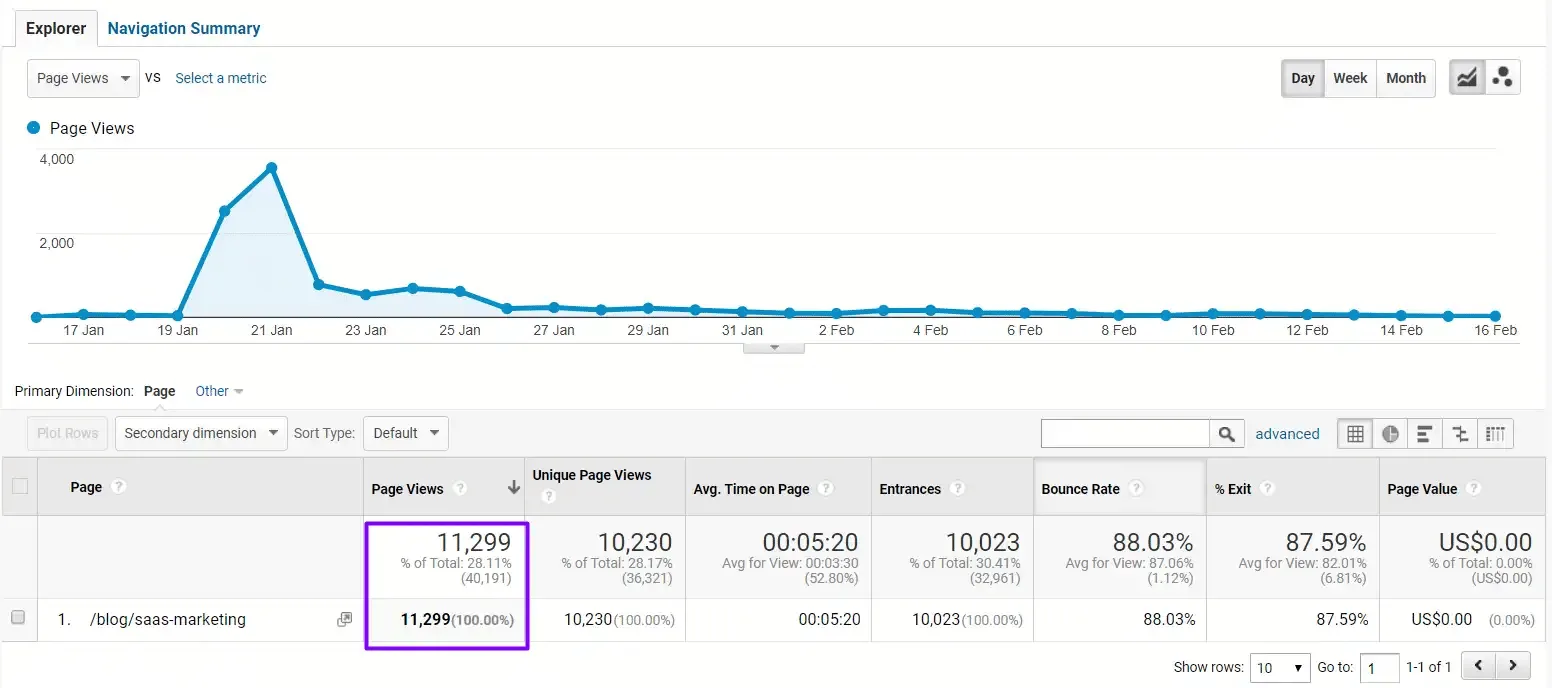
What happened: We published a 14,000-word guide to SaaS marketing with no pre-existing audience. First month: 11,000+ visits, 20+ leads, 50+ backlinks. It has driven over $50,000 in revenue with almost zero marketing spend. Every step is in our content marketing case study.
Why it worked: The topic came straight from client interviews: SaaS founders told us they didn't know which channels to bet on, so we wrote the definitive answer. Then we treated distribution as half the job and promoted it across 12 channels: Reddit, Hacker News, Facebook groups, and small paid boosts.
Steal this:
- Ask customers what problem they can't find a good answer to. That's your topic, validated.
- Write the resource that makes the top-ranking posts look thin: more examples, more tactics, more screenshots.
- Budget as many hours for distribution as for writing. A great post nobody sees is a draft.
- Capture leads inside the content with relevant offers, not just a sidebar form.
3. Apollo Digital: Local SEO That Drove ~$3M for an Interior Design Firm
What happened: Alder & Tweed, a luxury interior design firm, now ranks #1 for "interior designer" and "interior design agency" in Park City, Bozeman, Big Sky, and other locations they serve. Year one: 2,770+ monthly organic visits (20x the goal) and 210+ leads. Today organic drives ~30 leads a month, and SEO has generated roughly $3M in extra revenue over two years. Details in our interior design SEO case study.
Why it worked: Local intent is winnable with focused pages. We built a dedicated landing page per location, optimized their Google Business profiles, stacked NAP citations, and ran Google Ads to keep leads flowing while the SEO compounded.
Steal this:
- Build a real landing page for every location you serve: unique copy, local proof, local keywords.
- Claim and fully optimize a Google Business Profile per office.
- Bridge the ramp-up with search ads so the business feels results from month one.
- Measure leads and revenue, not rankings. Rankings are the means, not the result.
SEO Case Studies
The pattern across all three: SEO wins come from matching search intent and prioritizing winnable keywords. Links amplify that; they don't replace it. (Want more patterns like these? We broke down 21 of them in our guide to SEO examples.)
4. Backlinko: 652% More Organic Traffic in 7 Days
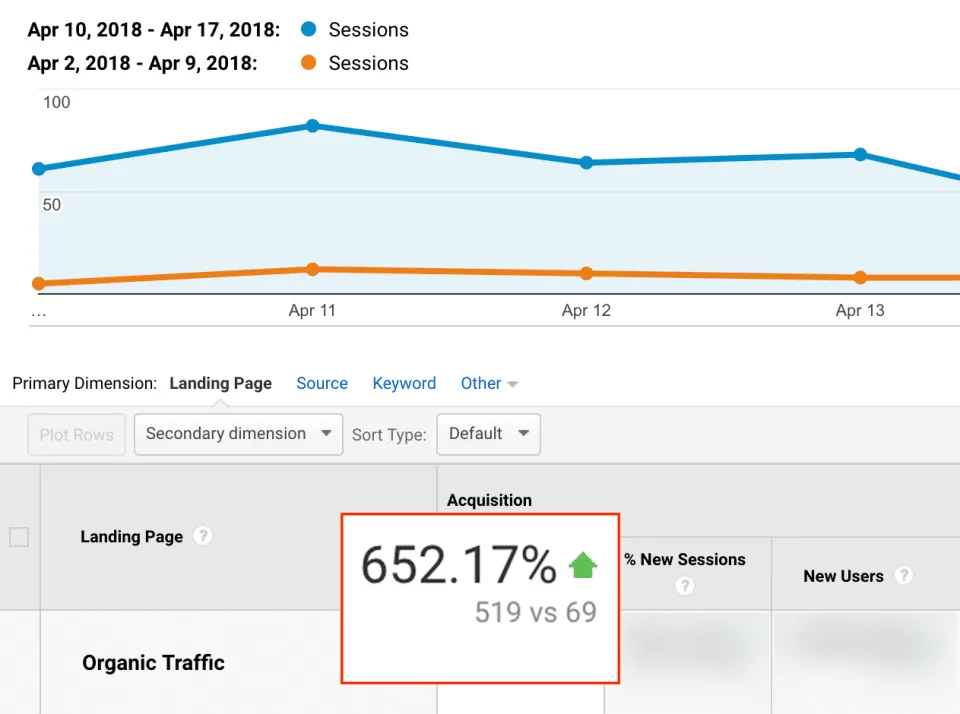
What happened: Brian Dean's mobile SEO post had 200+ backlinks and still sank to #11, averaging 4–5 visitors a day. He relaunched it with the Skyscraper Technique 2.0: organic traffic up 652.1% in 7 days, ranking from #11 to #5.
Why it worked: The keyword was "mobile SEO checklist"-adjacent: searchers wanted a checklist, and he'd written a case study. Reformatting the page to match intent did what hundreds of backlinks couldn't.
Steal this:
- List your pages stuck between positions 8 and 20 that already have links.
- Search the target keyword and note the dominant format on page one: listicle, checklist, tool, guide.
- Rebuild your page in that format, and front-load the direct answer.
- Republish with a current date and give it two weeks before judging.
5. CanIRank × Fieldwire: Top 3 Rankings in 6 Months on a Brand-New Domain
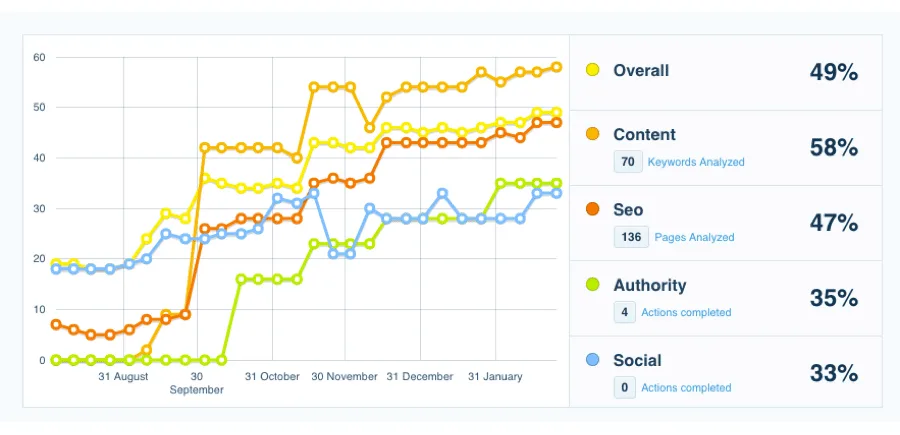
What happened: Within 6 months of launching on the new Fieldwire.com domain, the construction software startup hit top-3 rankings for nearly all primary keywords: 100+ new rankings, 200 improved ones, and organic traffic worth over $10,000/year in ad spend, an 853% increase. Full write-up in the CanIRank case study.
Why it worked: Instead of chasing high-volume keywords, they prioritized by probability of ranking, then poured effort into pages that were already ranking, just too low to matter.
Steal this:
- Score keywords by winnability for your domain, not raw volume.
- Fix "almost ranking" pages first: positions 5–15 with real traffic potential are your cheapest wins.
- Pitch founder stories to industry media for links while the content work compounds.
6. Kaiserthesage: 50K to 300K+ Monthly Visits, Built on Links
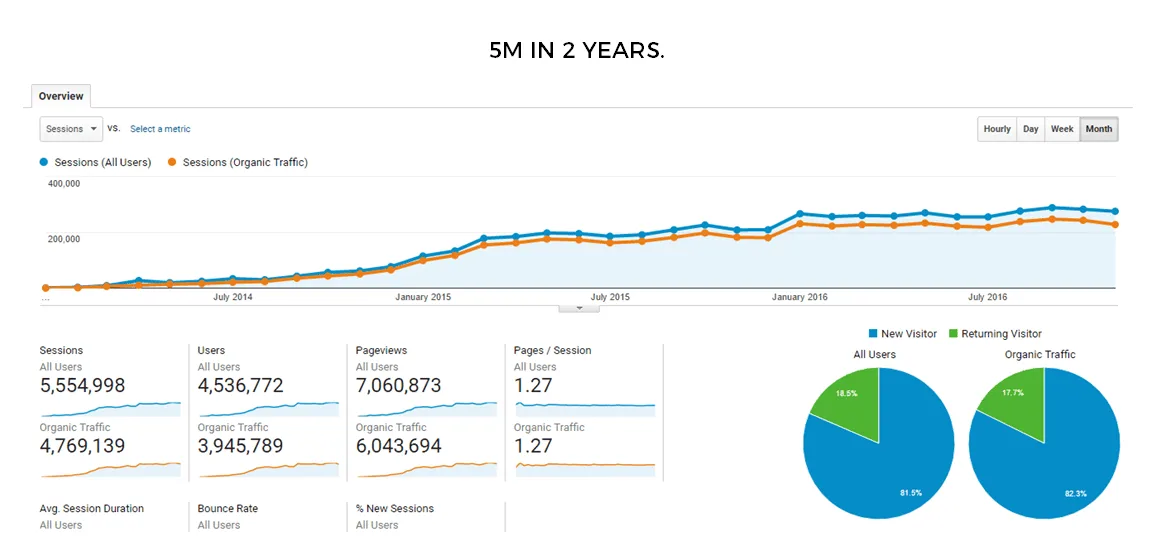
What happened: Jason Acidre's enterprise link building guide documents scaling a site from 50K to 300K+ monthly visits (almost 5 million organic visits) with 80% of campaign effort focused on acquiring high-quality links.
Why it worked: Link building is usually a string of one-off wins. Jason turned it into a system: defined tactics, prospect lists sorted by authority, and disciplined follow-up, all pointed at genuinely link-worthy assets.
Steal this:
- Pick two or three link tactics you can run as a repeatable process: broken link building, resource pages, link reclamation.
- Build prospect lists ranked by authority and topical fit before writing a single email.
- Follow up at least three times. Most "failed" outreach is just abandoned outreach.
- Feed the machine with assets that deserve links: original research, definitive guides, free tools.
Content Marketing Case Studies
The short version: one heavily-promoted keystone piece beats a quiet archive, and data-driven content earns the links that lift everything else you publish.
7. Content Mavericks: 87,591 Visits to One Blog Post in 60 Days
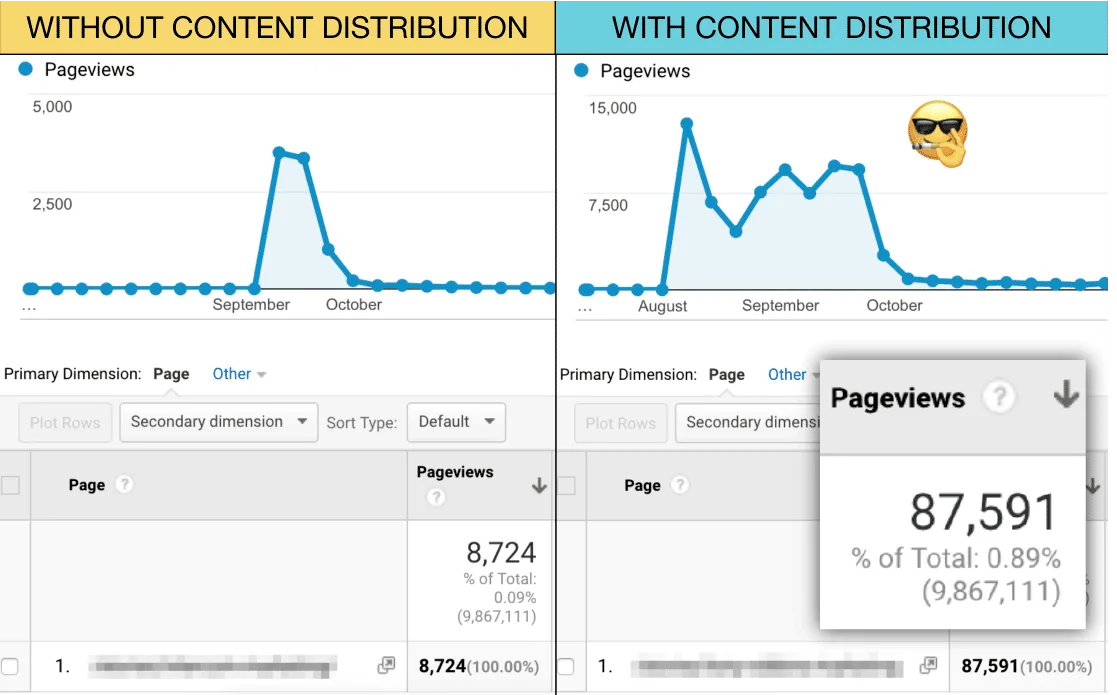
What happened: Chris Von Wilpert wrote one giant teardown of HubSpot's marketing and used a layered content distribution strategy to drive 87,591 visitors to it in 60 days, settling into a steady ~500 visitors a week afterward.
Why it worked: Distribution in concentric circles. Inner circle first (people who already knew him), then email and push, then paid retargeting to "manufacture" the momentum that makes content look (and then become) viral.
Steal this:
- Put your quarter's content budget into one keystone post instead of ten forgettable ones.
- Launch to your warmest audience first. Early engagement is the proof everyone else needs.
- Retarget everyone who engaged with cheap ads to compound the reach.
- Keep promoting the same piece for months. Distribution is a campaign, not a launch day.
8. YesOptimist × College Raptor: 0 to 100K Monthly Sessions in About a Year
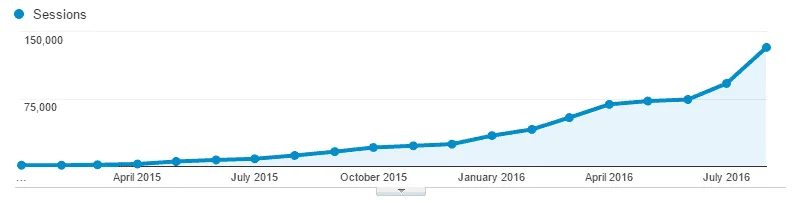
What happened: Using what they call the trifecta strategy, YesOptimist took college-search startup College Raptor from zero to 100,000+ organic sessions per month in just over a year (over a million visitors total). One data-driven "Hidden Gems" college ranking pulled 250,000 visitors in a single week, and roughly 200 evergreen articles turned that authority into compounding search traffic.
Why it worked: The viral data pieces earned links and authority fast; the evergreen library converted that authority into rankings. Either half alone underperforms. The combination is the strategy.
Steal this:
- Ship a link-magnet early: rankings, maps, or original data about your industry.
- Email everyone you feature. Being flattering is the world's most reliable outreach angle.
- Follow up with a steady cadence of evergreen, keyword-targeted articles.
- Let the link authority from viral pieces lift the evergreen pages: interlink them deliberately.
Paid Ads Case Studies
Three campaigns, one lesson: paid traffic wins on structure (audience temperature, aggressive testing, and knowing your unit economics), not on clever ad copy.
9. AdEspresso × BionicGym: $900K+ Raised With 252 Split-Tested Ads
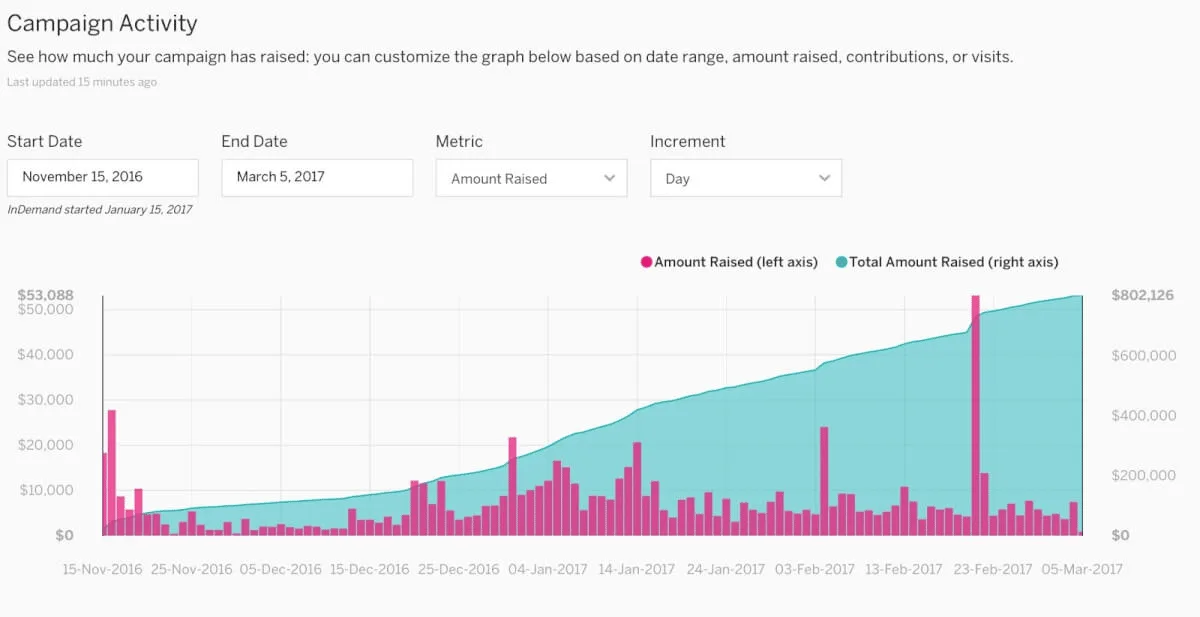
What happened: BionicGym's Indiegogo campaign raised over $900K from 2,000+ backers across 76 countries. The engine: Facebook ads scaled from $200/day to $1,500/day, with 252 ads split-tested at once and remarketing campaigns hitting 9x ROI at $44 per conversion.
Why it worked: They treated creative testing as the strategy, not a chore: one campaign per country, auto-optimization shifting budget to winners, and lookalikes built only from proven audiences.
Steal this:
- Structure campaigns by market so budgets and results stay readable.
- Test creatives in volume and kill losers fast. Let the platform reallocate to winners.
- Point your heaviest retargeting at video viewers and page visitors; that's where the 9x lived.
- Only scale budget after the economics work at small spend.
10. Andrew Hubbard: $36,449 in Course Sales From $4,159 in Ads
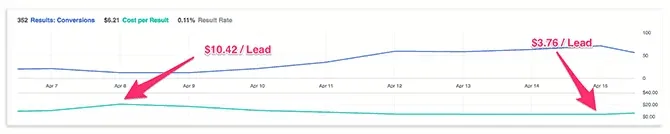
What happened: Running a course launch for a client, Andrew Hubbard turned $4,159 in Facebook ad spend into $36,449 in revenue, an 876% ROI. Testing dropped cold-traffic registration costs from $10.42 to $3.76, and a single urgency campaign in the final 24 hours spent $160.96 to drive over $10,000 in sales.
Why it worked: Audience temperature dictated everything. Warm audiences got the direct offer; cold traffic got an ungated blog post first, then retargeting into the funnel. Urgency ads were saved for when urgency was real.
Steal this:
- Run ads to warm audiences (email list, page fans, site visitors) before spending a cent on cold.
- Send cold traffic to genuinely useful ungated content, then retarget readers with the offer.
- Hold deadline-driven ads for actual deadlines. That's when cheap spend converts hardest.
- Judge every ad set on cost per qualified lead, not clicks.
11. Paid Insights: $520 in Google Ads Into $6,120 for a Local Practice
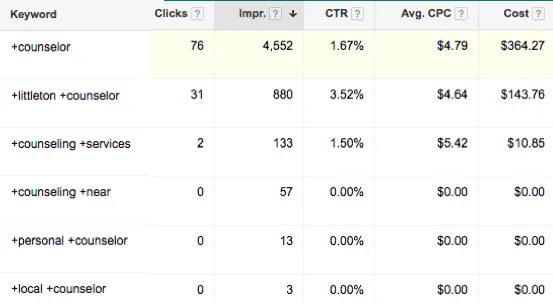
What happened: Over two months, Paid Insights spent $520 on Google Ads for a mental health counselor and acquired 6 new clients worth $6,120, an $87 cost per acquisition against a customer lifetime value of roughly $1,020.
Why it worked: Small budget, surgical targeting. Ads only ran in zip codes within a short drive of the office, the site was rebuilt for conversion before spend started, and the LTV math made the CPA ceiling obvious.
Steal this:
- Calculate customer lifetime value first. It tells you exactly what a lead is allowed to cost.
- For local services, target by realistic drive time, not by city or region.
- Fix the landing page before funding the campaign; ads amplify whatever the page already does.
- Don't wait for a big budget. High-intent local search converts at $10/day.
Email, Referral & Launch Case Studies
The common thread: your existing audience recruiting the next one is the cheapest acquisition channel that exists, if the mechanics make sharing worth their while.
12. Harry's: 100K Emails in One Week Before Launch
What happened: A week before launching, Harry's ran a two-page milestone referral campaign, documented step-by-step (with code) on Tim Ferriss's blog: roughly 85K valid email addresses (100K+ total) in seven days. 77% came from referrals (about 20K people referred about 65K friends), and 200+ superfans referred 50+ friends each. Total prize cost: product for about 3,000 people.
Why it worked: Milestone rewards (5 referrals = shave cream, 50 = a year of free shaving) paid in product, which filtered for actual future customers. And the campaign was seeded through all 12 employees' personal networks on day one: the loop needs fuel before it spins.
Steal this:
- Build a two-page flow: email capture, then a referral page with a unique share link.
- Reward milestones with your product, not cash; it attracts buyers, not bounty hunters.
- Seed through your team's real networks the moment it goes live.
- Make the top tier aspirational enough to brag about.
13. Morning Brew: 100K to 1.5M Subscribers in 18 Months
What happened: Tyler Denk, who built Morning Brew's growth stack (and later founded beehiiv), documented how the newsletter grew from 100,000 subscribers to 1.5 million in just 18 months, with a milestone referral program embedded in every single issue as the engine.
Why it worked: The referral ask lived inside the product itself: every daily email carried the reader's unique link and progress. Early tiers were cheap, status-y rewards (stickers, exclusive content) rather than expensive prizes, so the program scaled without burning cash.
Steal this:
- Put the referral ask inside the thing people already open, not in a separate campaign.
- Give every subscriber a unique link and show their progress toward the next milestone.
- Start with low-cost, identity-driven rewards; status beats stuff.
- Celebrate every milestone with a dedicated email that tees up the next one.
14. ConvertKit: $98K to $625K MRR in 12 Months of Webinars
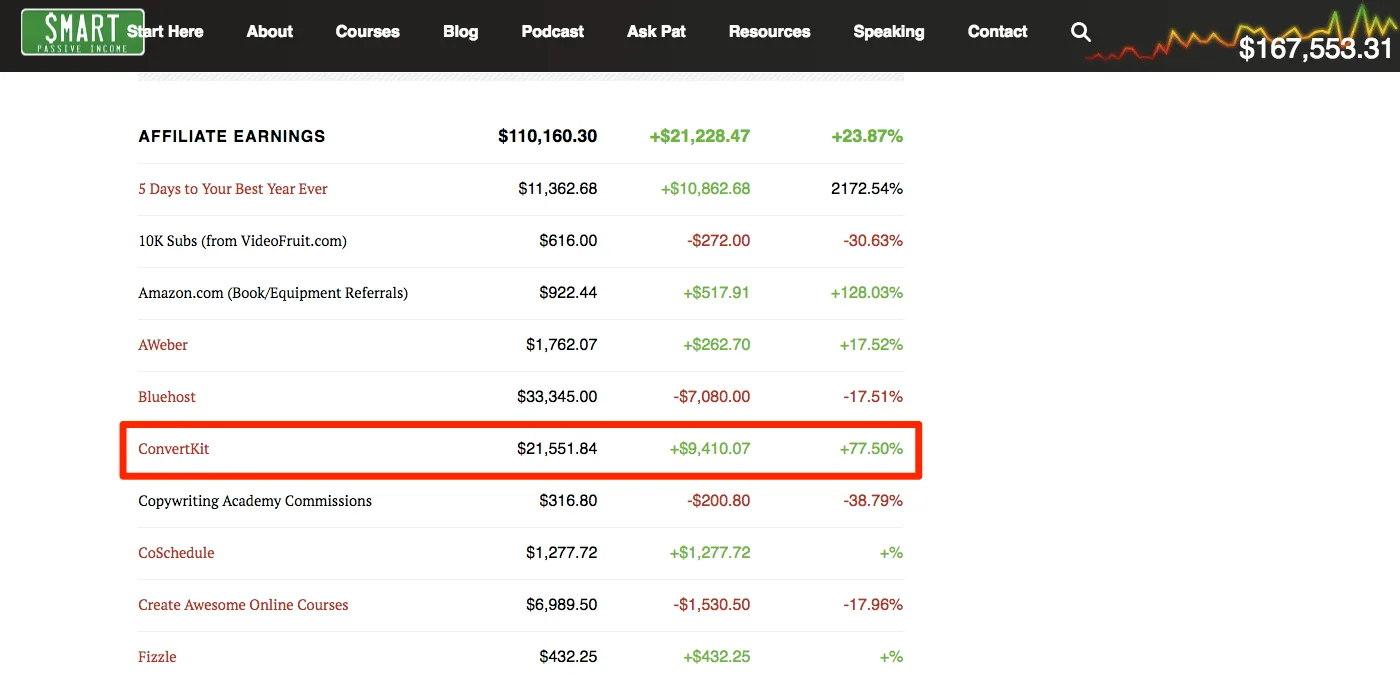
What happened: ConvertKit grew monthly recurring revenue from $98K to $625K in 12 months (637% growth) by hosting more than 150 webinars in a year, per this Leadfeeder interview. At peak that meant 20–30 webinars a month; one partner webinar with Pat Flynn drove around a thousand signups in 24 hours.
Why it worked: One channel, saturated. Every webinar was co-hosted with an affiliate partner (borrowed audiences with aligned incentives), and they said yes to small audiences, because reps compound and small partners grow.
Steal this:
- Pick the one channel that fits your product and saturate it before adding another.
- Co-host with partners who own your audience; give them a real revenue share.
- Don't gatekeep on audience size. Volume of at-bats beats occasional home runs.
- Keep production simple enough that you can do it three times a day.
Product-Led & Retention Case Studies
Direct answer: past a certain size, retention beats acquisition. The biggest growth wins here came from keeping users, not finding them. (For scrappier acquisition plays, see our roundup of growth hacking examples.)
15. Duolingo: 4.5x Daily Active Users by Betting on Retention
What happened: Former Duolingo CPO Jorge Mazal broke down on Lenny's Newsletter how Duolingo grew DAU 4.5x over four years. The wins were retention mechanics: leaderboards lifted total learning time 17%, streak improvements cut daily churn of their best users by over 40%, and the share of users with a 7-day-plus streak nearly tripled. Meanwhile a referral program moved new users just 3%, and a gamification feature copied from another app was, in his words, completely neutral.
Why it worked: They modeled their growth and found retention was the highest-leverage lever, then tested relentlessly and killed what didn't move the metric, including ideas that had worked brilliantly for other companies.
Steal this:
- Model your funnel before picking projects. The biggest lever is rarely the loudest one.
- Borrow mechanics only when your users' motivation matches the source app's.
- Invest in streaks, status, and habit loops for your most engaged users.
- Kill neutral experiments fast and publicly. Momentum comes from honest scorekeeping.
16. BuzzSumo: $2.5M Revenue Run Rate in Its First Full Year
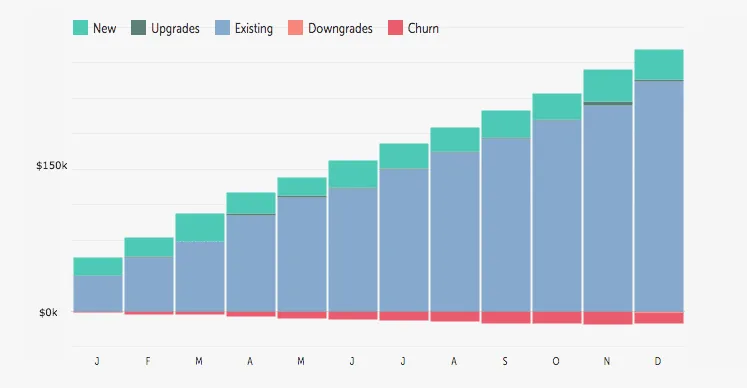
What happened: By the end of 2015, its first full financial year, BuzzSumo hit a $2.5M annual revenue run rate with over 160,000 freemium subscribers, 2,000 paying customers, and revenue growth above 10% a month, as told in their own case study.
Why it worked: The free tier was the marketing budget. A genuinely useful free tool got influential marketers using (and publicly citing) BuzzSumo, while original data from the product powered content nobody else could write.
Steal this:
- Make the free tier genuinely useful on its own. Crippled trials don't get shared.
- Get respected practitioners using the product publicly; their screenshots are your ads.
- Publish original research only your product's data can produce.
- Fix stickiness and churn before pouring anything into paid acquisition.
How to Actually Use a Case Study
Reading case studies is entertainment. Applying one is a process:
- Match the constraints, not the outcome. A bootstrapped local business copying BionicGym's $45K/month ad budget will just lose money slower. Pick studies whose starting point (budget, audience, team) looks like yours.
- Extract the mechanism, not the tactic. Backlinko's win wasn't "make a checklist"; it was "match the format searchers want." The mechanism transfers; the tactic often doesn't.
- Run the smallest honest test. One page, one campaign, one referral tier. Small enough to be cheap, real enough to be conclusive.
- Measure the same metric the case study did. If they measured cost per qualified lead and you measure clicks, you haven't replicated anything.
Frequently Asked Questions
What makes a digital marketing case study worth reading?
Three things: real numbers from a linked primary source, enough process detail that you could replicate the work, and context: budget, timeframe, industry, and starting point. A "we 10x'd traffic" headline with no baseline, no timeline, and no method is an ad, not a case study.
How do I apply someone else's case study to my business?
Match constraints first (budget, audience, channel), extract the underlying mechanism rather than the surface tactic, then run the smallest test that could prove it works for you, measuring the same metric the original used. The four-step process above walks through it.
Why do so many famous case studies disappear?
Sites get redesigned, acquired, or shut down, and old posts get pruned. While refreshing this list in 2026 we found that over a third of the "classic" case studies we'd previously linked no longer exist. That's the meta-lesson: link primary sources, quote the numbers while they're live, and archive anything you'll want to cite later.
Are older case studies still relevant in the AI search era?
The mechanisms age well; the specifics don't. Intent-matching, distribution layers, referral loops, and retention math all still work in 2026, but CPCs, organic reach, and conversion benchmarks from 2015 are history. And one new layer matters: content structured with direct answers and verifiable claims is what AI search engines cite, which is exactly how this page is built.
The Pattern Across All 16
None of these wins came from a secret. They came from one well-chosen play, executed properly, measured honestly: intent-matching for Backlinko, distribution for Content Mavericks, referral mechanics for Harry's, retention for Duolingo.
So don't try to run all sixteen. Pick the one that matches your constraints, steal the playbook, and run it this month.
And if you'd rather have the team behind case studies #1–3 run it for you: here's how we work, and the calendar's below.