

Hiring SEO help comes down to six steps: decide what you actually need, pick the right type of hire, source three to five candidates, vet them with questions that reveal how they think, put scope and reporting in writing, and then judge the engagement on 30-60-90-day checkpoints instead of week-two rankings.
That's the whole playbook. The rest of this guide is how to run each step without getting burned, including the exact vetting questions, the answers that should worry you, and what fair pricing looks like right now.
One thing before we start. This guide covers hiring any flavor of SEO help: consultant, agency, freelancer, or in-house. If you've already decided you specifically want a dedicated consultant leading your organic strategy, read our guide to hiring an organic SEO consultant instead. It goes deeper on that one role. Still deciding? Stay here.
Here's what we'll cover:
- Step 1: Decide What You Actually Need
- Step 2: Pick the Right Type of Hire
- Step 3: Where to Find Candidates Worth Interviewing
- Step 4: The 10 Vetting Questions (and the Answers That Should Worry You)
- Step 5: What SEO Help Costs in 2026
- Step 6: Set the Contract and Expectations
- The 30-60-90-Day Checkpoints
- A Shortlist Worth Starting From
- FAQ
Why Hiring SEO Help Is Different in 2026
Short version: the job got bigger, and half the market hasn't noticed.
Google now answers a large share of queries directly with AI Overviews, and people increasingly ask ChatGPT, Perplexity, and Claude instead of searching at all. The data on what that does to clicks is not subtle. Pew Research found that users clicked a result on only 8% of searches that showed an AI summary, versus 15% without one. Ahrefs' analysis of 300,000 keywords found the top-ranking page loses roughly a third of its clicks when an AI Overview is present.
That doesn't make SEO dead. It makes the brief wider. The work that ranks you on Google is largely the same work that gets you named and cited inside AI answers: authority, clear structure, direct answers, technical health. But it has to be measured in both places now.
Which means the single fastest filter when hiring in 2026: ask every candidate how they measure visibility in AI answers. If the response is a blank stare or "AI is just a fad," they're scoping your channel with 2019 assumptions. You'll see this again in the vetting questions below.
Step 1: Decide What You Actually Need
Direct answer: before you talk to anyone, decide whether you need a diagnosis (an audit), ongoing growth (a retainer), or a one-off fix (a project). Most bad hires happen because the buyer skipped this step and let the seller define the scope.
Match your situation to the engagement:
| Your situation | What to buy | Typical shape |
|---|---|---|
| Traffic is flat or falling and you don't know why | One-off audit + strategy | 2-4 weeks, fixed fee, written findings and a prioritized roadmap |
| You know what to do but have no hands to do it | Execution help (freelancer or agency) | Monthly retainer or per-deliverable pricing |
| You want organic search to become a real pipeline channel | Ongoing strategy + execution | 6-12 month retainer with quarterly goals |
| One specific problem: a migration, a penalty, a technical mess | Scoped project with a defined end state | Fixed fee, clear acceptance criteria |
| SEO is a core, permanent channel and you have budget for a senior salary | In-house hire, often with outside support | Full-time role + consultant or agency for leverage |
Two rules of thumb:
- If you can't articulate the problem, buy an audit first. It's the cheapest way to find out what the real engagement should be, and it's a low-risk trial of how the person thinks.
- Don't buy a retainer to solve a project-shaped problem. A site migration doesn't need twelve months of invoices attached to it.
It also helps to know what competent ongoing SEO actually involves, so you can recognize it when someone describes it. We've documented our full SEO process (the same one behind the case studies linked later in this guide), and it makes a useful benchmark for what candidates describe to you.
Step 2: Pick the Right Type of Hire
Direct answer: consultants sell judgment, agencies sell judgment plus hands, freelancers sell hands, and in-house sells ownership. Pick based on which of those you're missing, not on price alone.
| Option | Best for | Watch out for |
|---|---|---|
| Consultant | Strategy, audits, diagnosing problems, guiding an existing team | They advise; someone still has to do the work. Budget for execution separately. |
| Agency | Full-service: strategy, content, links, and technical work, done for you | Quality varies wildly. Ask who actually works your account, not who sells it. |
| Freelancer | Defined, scoped tasks: content, link outreach, technical fixes | Great specialists rarely make good strategists. Don't outsource direction to the cheapest hands. |
| In-house | SEO as a permanent core channel with executive backing | One person can't cover strategy, content, links, and technical alone. Plan for support. |
A few honest notes from the other side of the table:
- Consultant vs. agency is mostly a question of hands. If you have writers and developers who can execute, a sharp consultant is fantastic leverage. If you don't, an advice-only engagement produces beautifully written documents that nobody implements.
- Freelancers are a great deal when the task is well-defined. We wrote a separate guide on hiring freelance SEO help: where to find them, what to pay, and how to scope the work so it doesn't drift.
- If you're going the agency route, the vetting burden is higher because you're buying a team you haven't met. Our guide on how to choose a digital marketing agency covers the agency-specific traps: bait-and-switch account teams, lock-in contracts, and reporting theater.
Step 3: Where to Find Candidates Worth Interviewing
Direct answer: the best candidates come from referrals and from public work (case studies, teardowns, talks, tools), not from whoever cold-emails you promising page one. Aim for a shortlist of three to five before you take a single call.
Where to look, in rough order of signal quality:
- Referrals from operators you trust. Ask founders and marketers in your network who they've actually paid, and whether they'd pay them again. One warm referral outperforms fifty directory listings.
- Public work. People who publish detailed case studies, process breakdowns, and teardowns are showing you how they think before you spend a dollar. It's the highest-signal free vetting that exists.
- Communities where SEOs talk shop. Subreddits like r/SEOCapitalist, SEO newsletters, and industry Slack groups. Watch who gives specific, generous answers, then check their site.
- LinkedIn, searched by specialty and vetted by what they've published, not by their headline.
- Freelance platforms (Upwork and friends): workable for scoped execution tasks, weak for strategy. Expect to filter hard.
Wherever a candidate comes from, run two free checks before you book a call:
- Put their domain through our website authority checker. A practitioner whose own site has no authority and no rankings is asking you to buy a product they can't build for themselves.
- Run their brand (and yours) through our AI visibility checker to see whether AI assistants know they exist. It's not disqualifying on its own, but it's a revealing conversation starter for Step 4.
Step 4: The 10 Vetting Questions (and the Answers That Should Worry You)
Direct answer: you don't need to know SEO to vet an SEO. You need questions that force specifics, and a list of the answers that predict a bad engagement. Here are the ten we'd ask, in order.
1. "Walk me through a recent engagement similar to mine. What did you do, and what happened?"
Good answer: a specific story: starting point, what they prioritized and why, what worked, what didn't, with numbers and a timeline.
Worry if: they can only speak in generalities ("we improved their visibility significantly") or every story ends in a suspiciously perfect hockey stick with no setbacks.
2. "What would your first 30 days look like?"
Good answer: some version of audit → research → prioritized plan, with quick wins shipped along the way.
Worry if: they propose deliverables before they've seen your analytics. "We'll publish 8 blog posts and build 20 links per month" is a package, not a plan.
3. "How do you decide what to work on first?"
Good answer: impact-based prioritization: revenue-adjacent pages first, fixes ranked by expected effect, keyword targets tied to what your buyers actually search.
Worry if: the answer is a fixed checklist applied to every client identically, or they can't explain the "why" behind any sequence.
4. "Where do your links come from?"
Good answer: a real methodology (digital PR, original data, relationship-based outreach, linkable assets) and honesty that good links are slow.
Worry if: guaranteed link counts per month, "our private network of sites," or prices per link that seem too good. Cheap guaranteed links are how sites end up penalized.
5. "Who actually does the work, and who writes the content?"
Good answer: named people, a clear process for briefs and review, and subject-matter input from your team where needed.
Worry if: the senior person you're talking to vanishes after the sale, or content comes from an anonymous pool (human or AI) with no editorial layer.
6. "How do you measure success in AI answers, not just Google rankings?"
Good answer: they track whether AI assistants mention and cite your brand across a defined panel of buyer prompts, alongside classic rankings, and they can name the tooling they use (we've broken down the best AI visibility tools if you want to know what competent looks like).
Worry if: a blank stare, "AI traffic doesn't matter," or vague hand-waving about "optimizing for AI" with no measurement behind it. In 2026 this is the single sharpest filter on the list.
7. "What will reporting look like, and what access do I get?"
Good answer: you keep owner access to Search Console, Analytics, and your CMS; reports connect work shipped to outcomes moved, monthly at minimum.
Worry if: reporting is a screenshot of vanity metrics, or they want accounts under their ownership "for convenience." That one is a serious red flag.
8. "What happens if it isn't working?"
Good answer: an honest description of how they diagnose and re-plan, and under what conditions they'd tell you to stop spending.
Worry if: the possibility is dismissed entirely. Everyone competent has had a campaign underperform; the tell is what they did next.
9. "Can you guarantee us a #1 ranking?"
This one's a trap (for them). The only good answer is no. Google's own hiring guidance says it flatly: no one can guarantee a #1 ranking. Anyone who takes the bait ("special relationship with Google," "proprietary algorithm access") has just failed the interview for you.
10. "Why did your last client stop working with you?"
Good answer: a candid, specific reason: budget shifted, goals hit, in-house team took over, or a mismatch they'll own their side of.
Worry if: they claim no client has ever left, or every departure was entirely the client's fault.
One last cross-check that costs nothing: everything they claim should be visible in their own footprint. Their site should rank for something. Their case studies should name real companies or show real screenshots. Their claims should survive five minutes with the free tools from Step 3.
Step 5: What SEO Help Costs in 2026
Direct answer: expect roughly $75-$150/hour for solid practitioners, $1,500-$5,000/month for most retainers, and $2,500-$5,000 for a serious one-off audit or project. Below that, be skeptical; well above it, expect senior specialists or competitive national campaigns.
The best public data here is Ahrefs' pricing survey of 439 SEO providers. Key numbers, blended with what we see in the market:
| Engagement | Market-typical range | Notes |
|---|---|---|
| Hourly consulting | $75-$150/hr | Survey average is $111/hr; only ~10% of providers charge over $150. Big-name specialists go $200-$300+. |
| One-off audit / project | $2,500-$5,000 | $2,501-$5,000 is the most common project band. Large or technically messy sites cost more. |
| Freelancer retainer | $1,000-$1,500/mo | Survey average ~$1,350/mo. Execution-focused. |
| Consultant retainer | $2,500-$4,000/mo | Survey average ~$3,250/mo. Strategy-heavy; execution often billed separately. |
| Agency retainer | $3,000-$5,000/mo | Survey average ~$3,200/mo for strategy plus execution. Local-only campaigns often run cheaper. |
| Competitive national / global campaigns | $5,000-$15,000+/mo | Providers serving worldwide markets charge over twice what local-market providers do. |
How to read this table without getting played:
- Suspiciously cheap is expensive. A "$299/month full SEO package" pays for templated reports and directory spam. You'll spend more cleaning it up than you saved.
- Price the outcome, not the hours. If organic pipeline is worth $50K/month to you, a $4K retainer that gets you there is cheap and a $1K one that doesn't is pure waste.
- Ask what's inside the retainer. Two "$4,000/month" proposals can differ by 3x in actual work shipped. Get deliverables in writing (Step 6).
For calibration: our own pricing is public: flat monthly tiers, no lock-in, covering both classic SEO and AI-search visibility. We publish it precisely because pricing opacity is where this industry hides its worst behavior.
Step 6: Set the Contract and Expectations
Direct answer: a good SEO contract fits on a few pages and answers five questions: what's being done, who owns what, how success is measured, when you check in, and how you leave. If any of the five is fuzzy, fix it before signing.
Put these in writing:
- Scope and deliverables. What ships monthly or quarterly (audits, content, links, technical fixes), specifically enough that "we did SEO stuff" can't be an invoice line.
- Ownership. You own the domain, the analytics and Search Console properties, the content, and every account created on your behalf. Non-negotiable. Losing your accounts to a departing vendor is the most expensive way to learn this.
- Measurement. Which metrics count (organic pipeline and conversions, target-page rankings, AI mentions and citations, not just raw traffic), the baseline on day one, and the reporting cadence.
- Check-in structure. A monthly written report plus a real conversation. Quarterly, a re-prioritization against goals.
- Exit terms. 30 days' notice, no long lock-in, and a handover obligation: documents, access, and work-in-progress transfer to you. Confident providers don't need 12-month handcuffs.
- No ranking guarantees, in either direction. You now know (Step 4, question 9) that a guarantee is a lie; don't ask your new hire to tell you one.
Also agree, before day one, on what the first quarter should produce. Which is the next section.
The 30-60-90-Day Checkpoints That Tell You It's Working
Direct answer: at 30 days you're grading the plan, at 60 you're grading the execution, at 90 you're grading the early signal. Traffic and revenue are lagging indicators; judging the first month on them is how good engagements get killed and bad ones survive.
Day 30: grade the plan
- You should have: a completed audit, clean tracking (Analytics, Search Console, rank and AI-visibility monitoring with a day-one baseline), a prioritized roadmap you actually understand, and the first quick wins shipped: title fixes, internal links, obvious technical repairs.
- Worry if: there's no written plan, they can't explain priorities in plain language, or they're already asking to renegotiate scope.
Day 60: grade the execution
- You should have: work shipping on the promised cadence (content live, fixes deployed, outreach underway), plus early leading indicators: more pages indexed, impressions trending up, long-tail keywords starting to register.
- Worry if: deliverables are slipping with rotating excuses, or every report is activity ("we optimized 14 pages") with no thread connecting it to the roadmap.
Day 90: grade the signal
- You should have: clear movement on target pages: rankings climbing from nowhere into the top 20-30, impressions and clicks growing on the pages that matter, first AI-assistant mentions showing up on your prompt panel, and an informed plan for the next quarter.
- Worry if: literally nothing has moved (no rankings, no impressions, no indexation gains) and the explanation is "SEO just takes time." Time is real; zero leading indicators at 90 days is not patience, it's a diagnosis.
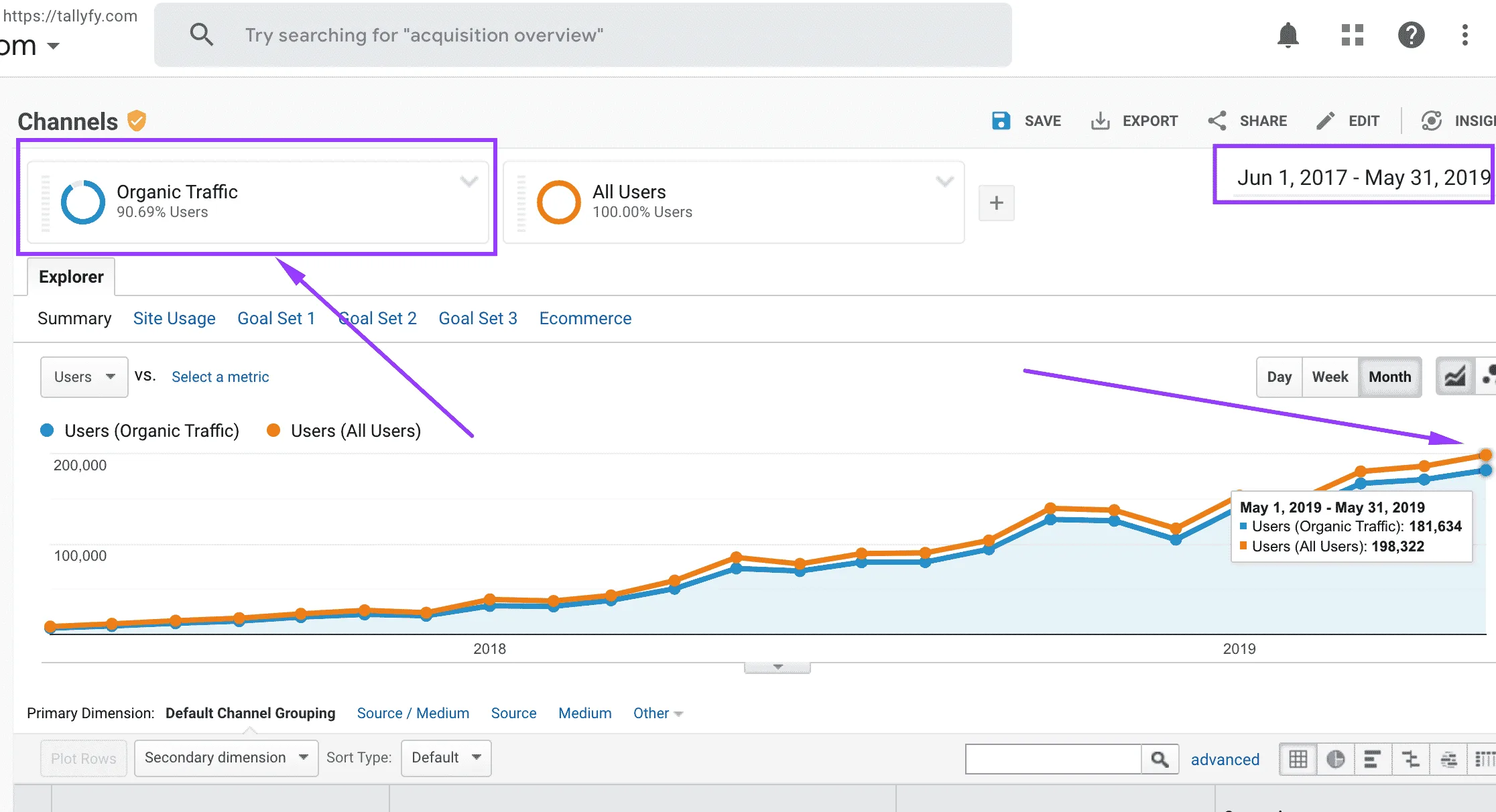
Full results take longer: 6 to 12 months for compounding traffic and pipeline, faster on high-authority sites, slower in brutal niches. The 90-day gate isn't "did we win yet," it's "is the trajectory believable." Our SEO process post shows what that trajectory looked like on the way to 200K monthly organic visits for one client, checkpoint by checkpoint.
A Shortlist Worth Starting From
If you'd rather not start from a blank search bar, here are teams we'd put on a 2026 shortlist. Standard disclosure: we're first on our own list. Judge us by the public work, same as everyone else.
1. Apollo Digital (that's us)
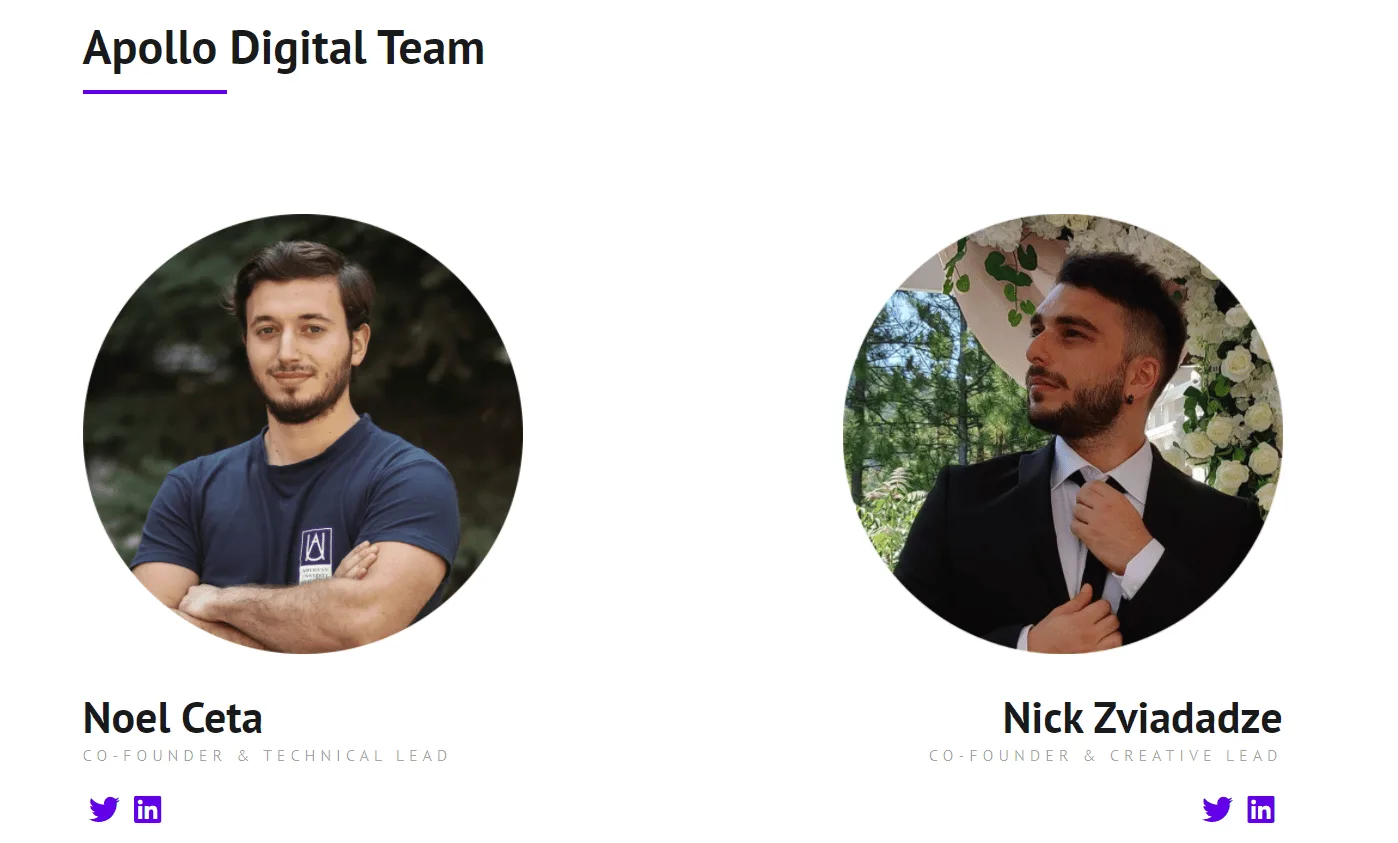
We're a full-service SEO and content agency that now runs AI-search visibility (GEO) as part of every engagement: rankings on Google and citations in ChatGPT, Perplexity, and AI Overviews, measured side by side.
We keep our receipts public: how we took a BPM SaaS from 0 to 200K monthly organic visits, our content marketing case study, an interior design SEO case study, and the rest of our case studies. Pricing is on the site, flat and lock-in-free. Every claim in this guide, you can hold us to.
2. Solombo.com

Solombo is a B2B SaaS growth partner founded by Konstantine Ge. Instead of selling fixed SEO packages, the team embeds with a small roster of clients and connects SEO, GEO, paid, and product data to actual pipeline and revenue.
Their work spans search visibility, topical authority, technical SEO, and link building, plus AI-powered workflows on the operational side. Past and current clients include 7-figure ARR SaaS companies like Chamaileon, Automizy, OptiMonk, and Felgo.
3. Orainti (Aleyda Solis)
Orainti is the boutique consultancy of Aleyda Solis, one of the most respected SEO consultants working: 15+ years in, specialized in international, e-commerce, marketplace, and SaaS SEO, and now AI search optimization. She publishes constantly (the SEOFOMO newsletter among other things), so you can audit exactly how she thinks before you ever email her. Strategy-level consulting, not hands-on execution. Bring your own team.
4. Foundation (Ross Simmonds)
Foundation is Ross Simmonds' B2B content and SEO agency, now positioned squarely around AI visibility for B2B tech and SaaS, one of the earlier agencies to rebuild its offer around being cited by AI engines, not just ranking. Strong fit if you're B2B SaaS and want content, distribution, and AI-search visibility from one team.
5. BibiBuzz (Bibi Raven)
BibiBuzz is Bibi Raven's link-building agency, built on relationship-based outreach and natural link earning rather than bulk placement spam. A specialist option: if the vetting in Step 4 told you your gap is specifically links (and question 4's red flags told you what to avoid), this is the shape of provider to look for.
FAQ: Hiring an SEO Expert
How much does it cost to hire an SEO expert?
Per Ahrefs' survey of 439 SEO providers, the average hourly rate is $111, with $75-$150 the most common band. Average monthly retainers run about $1,350 for freelancers, $3,200 for agencies, and $3,250 for consultants; one-off audits and projects most commonly land between $2,501 and $5,000. Local SEO is cheaper, and competitive national or global campaigns run $5,000-$15,000+ per month.
How do I know if an SEO consultant is legit?
Public case studies with real numbers, a website that itself ranks, plain-language answers to the ten questions in Step 4, and no resistance to you owning every account. Walk away from ranking guarantees, "special relationships with Google," and anyone who can't explain how they measure AI-answer visibility.
Should I hire an SEO consultant, an agency, or a freelancer?
Consultant if you need strategy and have hands to execute. Agency if you need strategy plus execution done for you. Freelancer for well-scoped individual tasks. In-house only when SEO is a permanent core channel and you can fund a senior hire. Even then, most in-house teams keep outside support for leverage.
How long does SEO take to show results?
Leading indicators (impressions, indexation, long-tail rankings) should appear within 60-90 days. Meaningful traffic and pipeline typically take 6-12 months, depending on your site's authority and the competitiveness of the niche. Anyone promising page one in 30 days is targeting keywords nobody searches, or lying.
Do I still need SEO now that people ask ChatGPT?
Yes. The work just answers to two masters now. AI assistants cite sources they can parse and trust, and the fundamentals that earn Google rankings (authority, structure, direct answers, technical health) are the same ones that earn AI citations. Hire someone who measures both; that's the difference between a 2026 practitioner and a 2019 one with a new website.
Key Takeaways
- Decide what you need (audit, retainer, or project) before you take calls, or the seller will decide for you.
- Vet with questions that force specifics. The two sharpest filters in 2026: "how do you measure AI-answer visibility?" and "can you guarantee rankings?" (the only good answer to the second is no).
- Expect $75-$150/hr, $1,500-$5,000/mo retainers, and $2,500-$5,000 audits. Suspiciously cheap SEO is the most expensive kind.
- Contract for ownership and exit terms. You keep the accounts, the content, and the ability to leave in 30 days.
- Judge the first quarter on the 30-60-90 checkpoints (plan, execution, signal), not on week-two traffic.